
Description
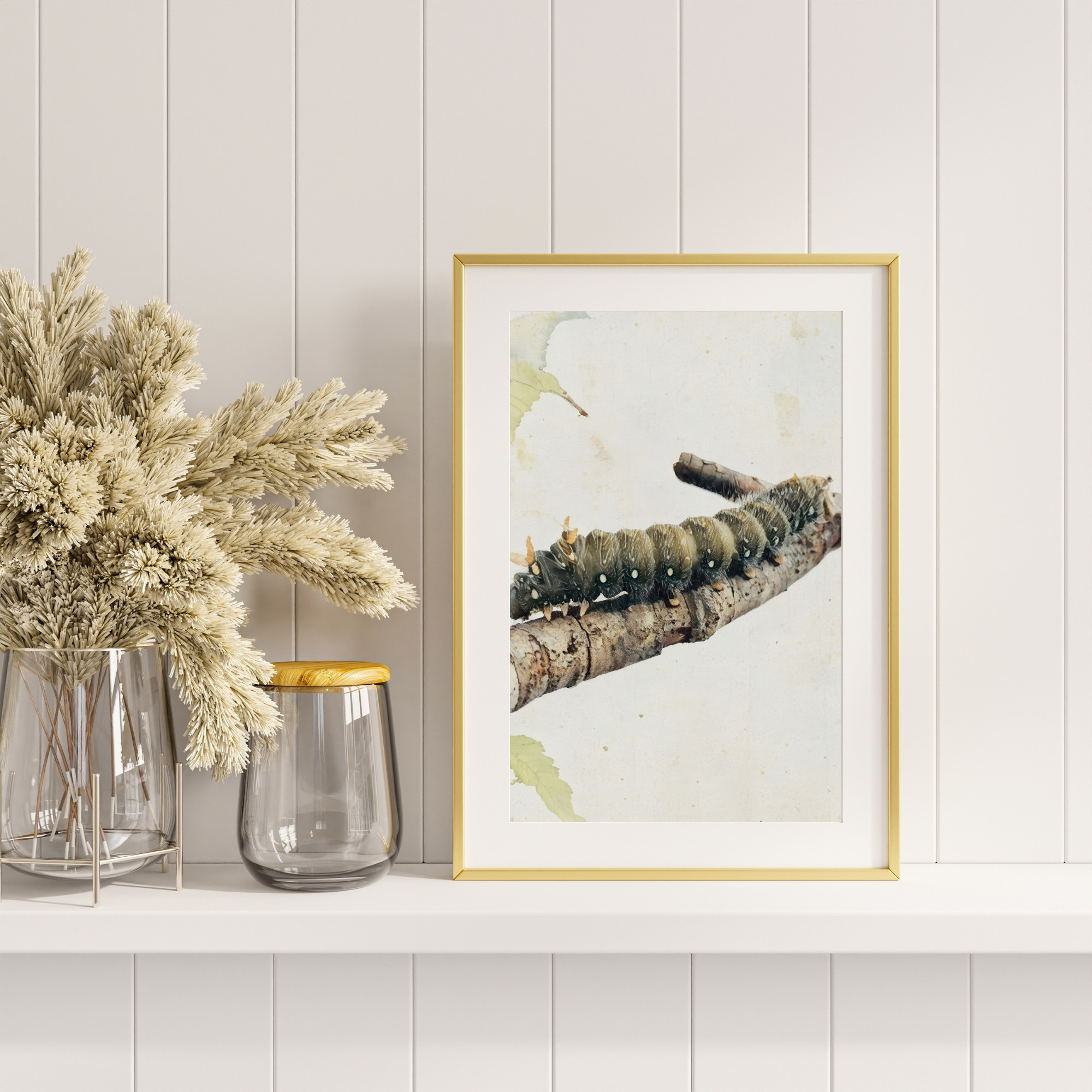
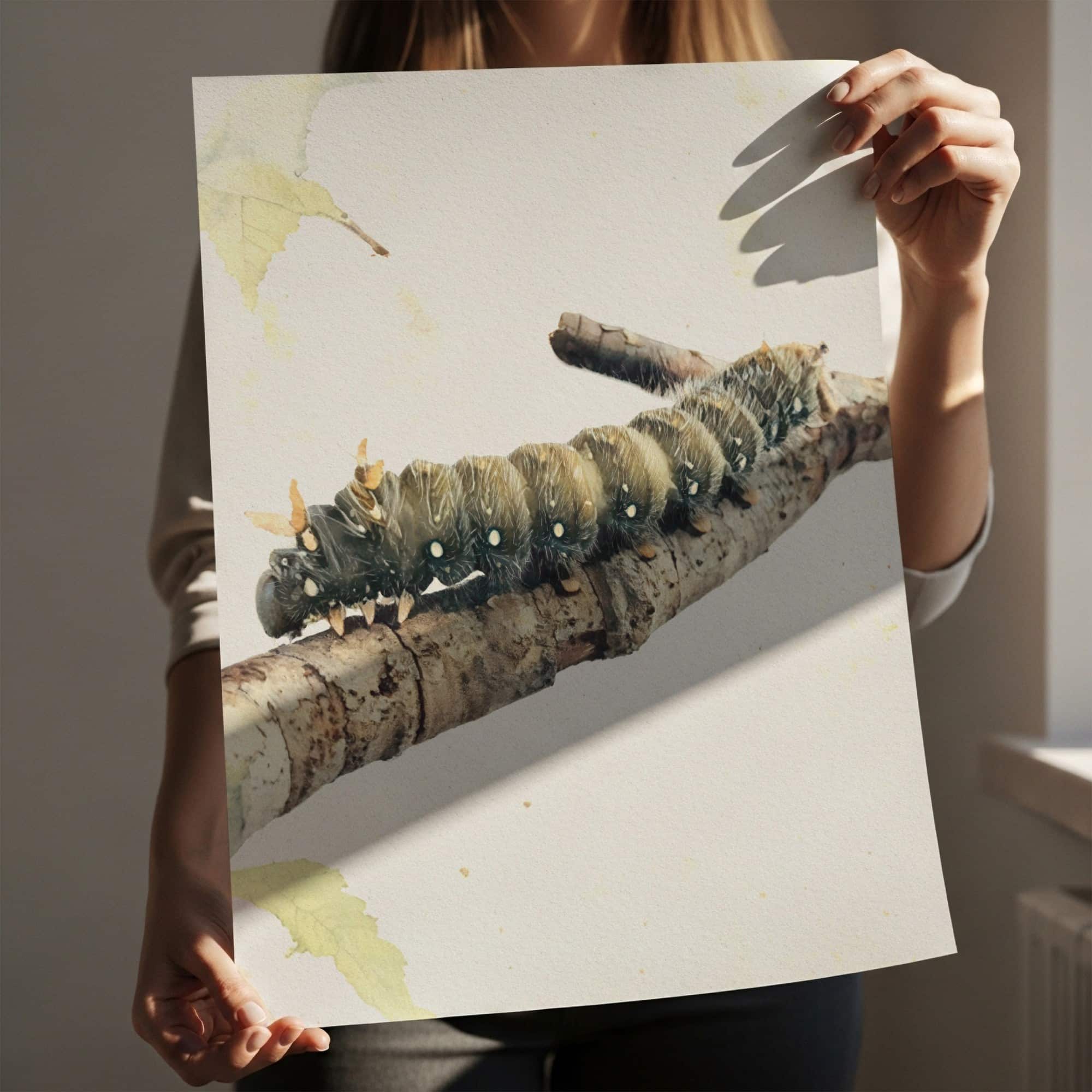
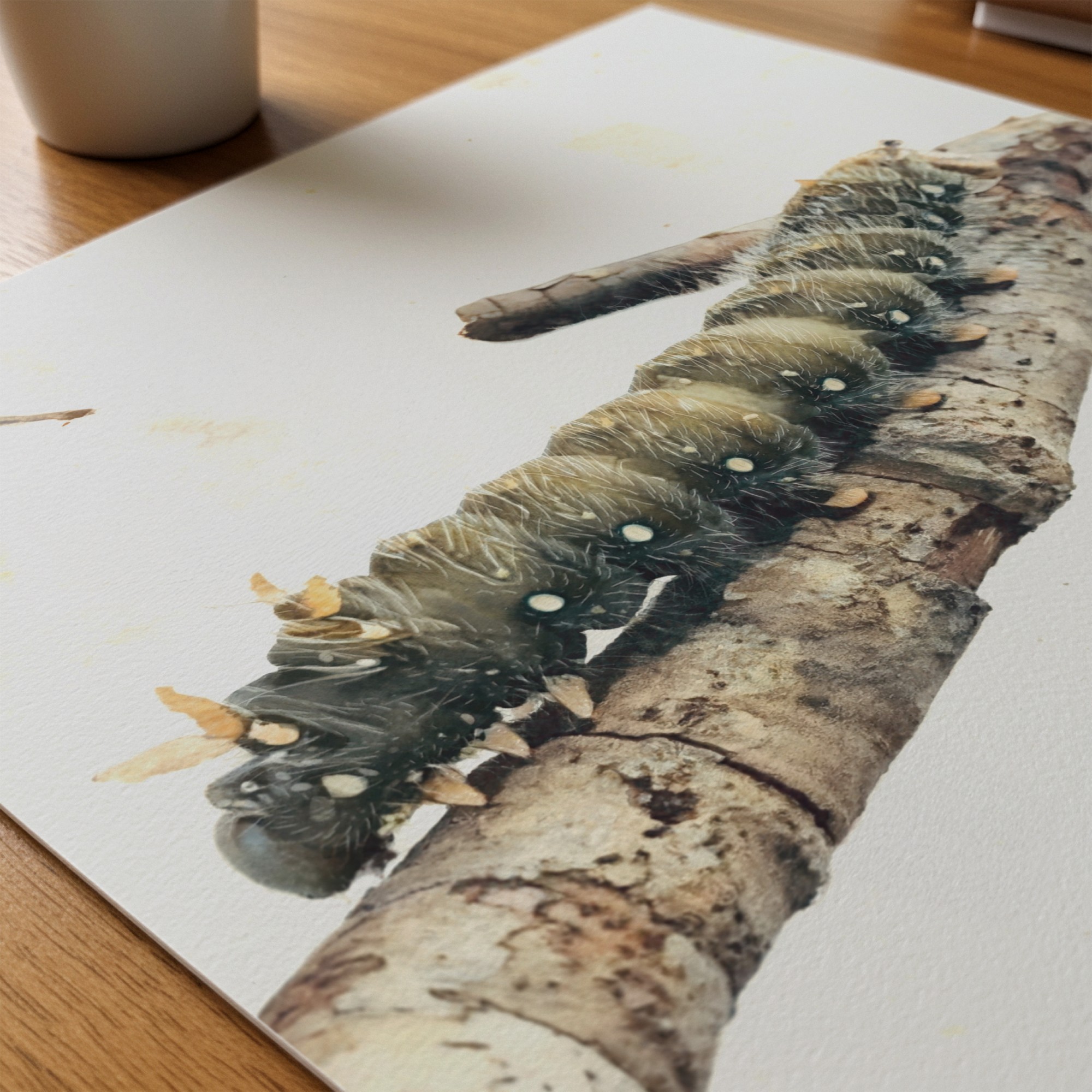
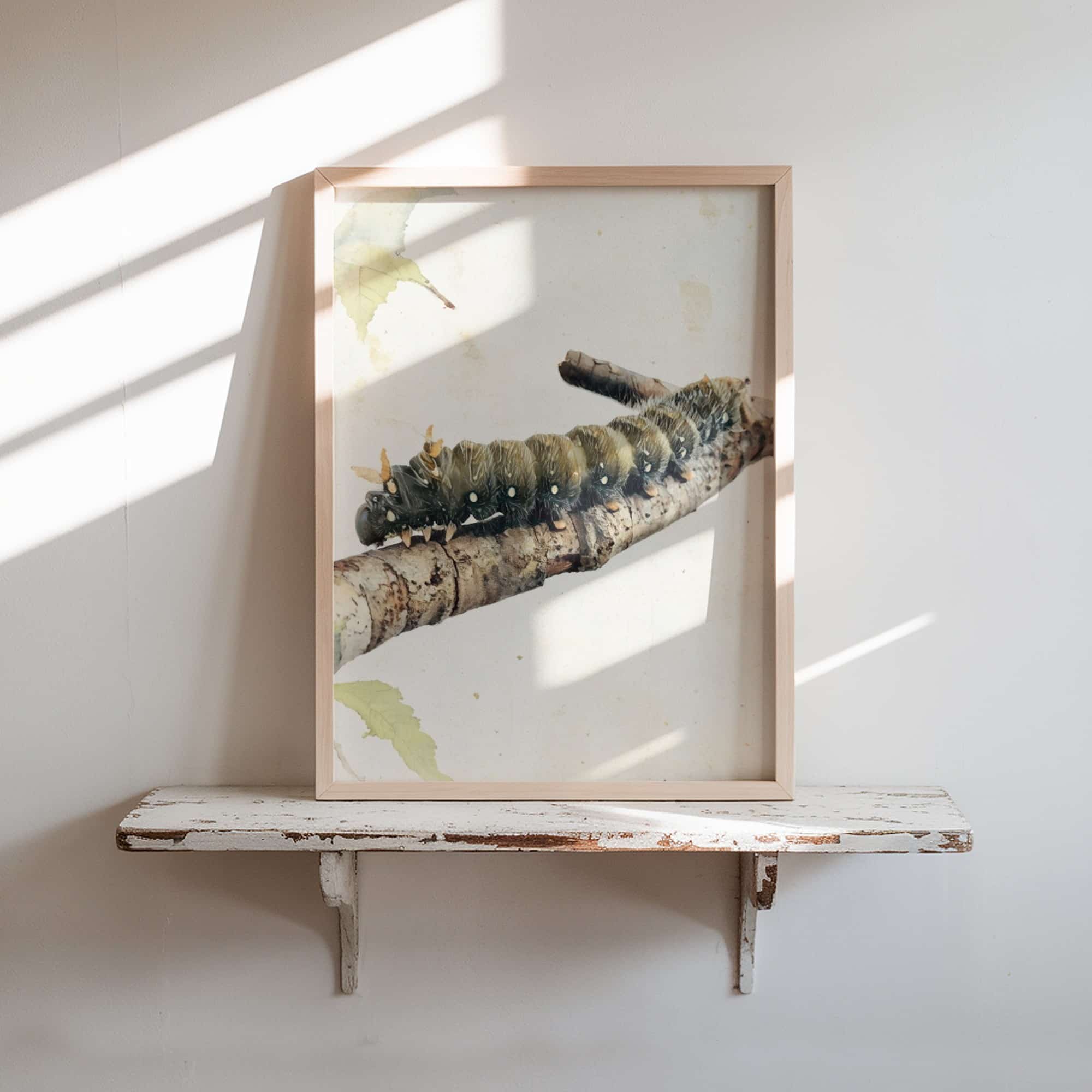
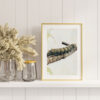
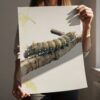
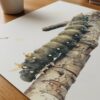
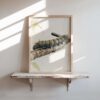
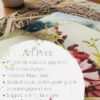
Some movement is progress; Woodland Commuter argues that movement is awareness. The caterpillar doesn’t rush across the weathered branch—it measures it. Each lifted segment feels like a tiny decision, a choice made rather than a step taken. The watercolor calm softens the scene, but nothing dissolves: bead-like markings, gentle spine, and leaf-filtered light stay intact, as though the forest agreed to speak quietly and still be heard.
Placed in a craft space, the piece turns effort into attention—hands slow, ideas land, and repetition feels like part of the reward. In a hallway, it changes pace without stopping it; people move, but they move deliberately. Near a reading chair, it turns pages into paths, nudging the brain toward curiosity instead of consumption. Nothing here instructs urgency. Everything here recommends noticing.
Within the Quiet Growth trio, Woodland Commuter provides the middle logic. Garden Acrobat sparks delight; Orchard Wanderer follows curiosity; Woodland Commuter proves that direction isn’t a sprint—it’s a series of chosen inches. It doesn’t celebrate slowness; it clarifies it.
What stays after you look isn’t the caterpillar—it’s the impulse it leaves behind. You feel yourself choosing your next step instead of taking it by default. That’s not decoration; that’s discipline disguised as calm.